Tony Oursler
mAcHiNe CrYsTaL
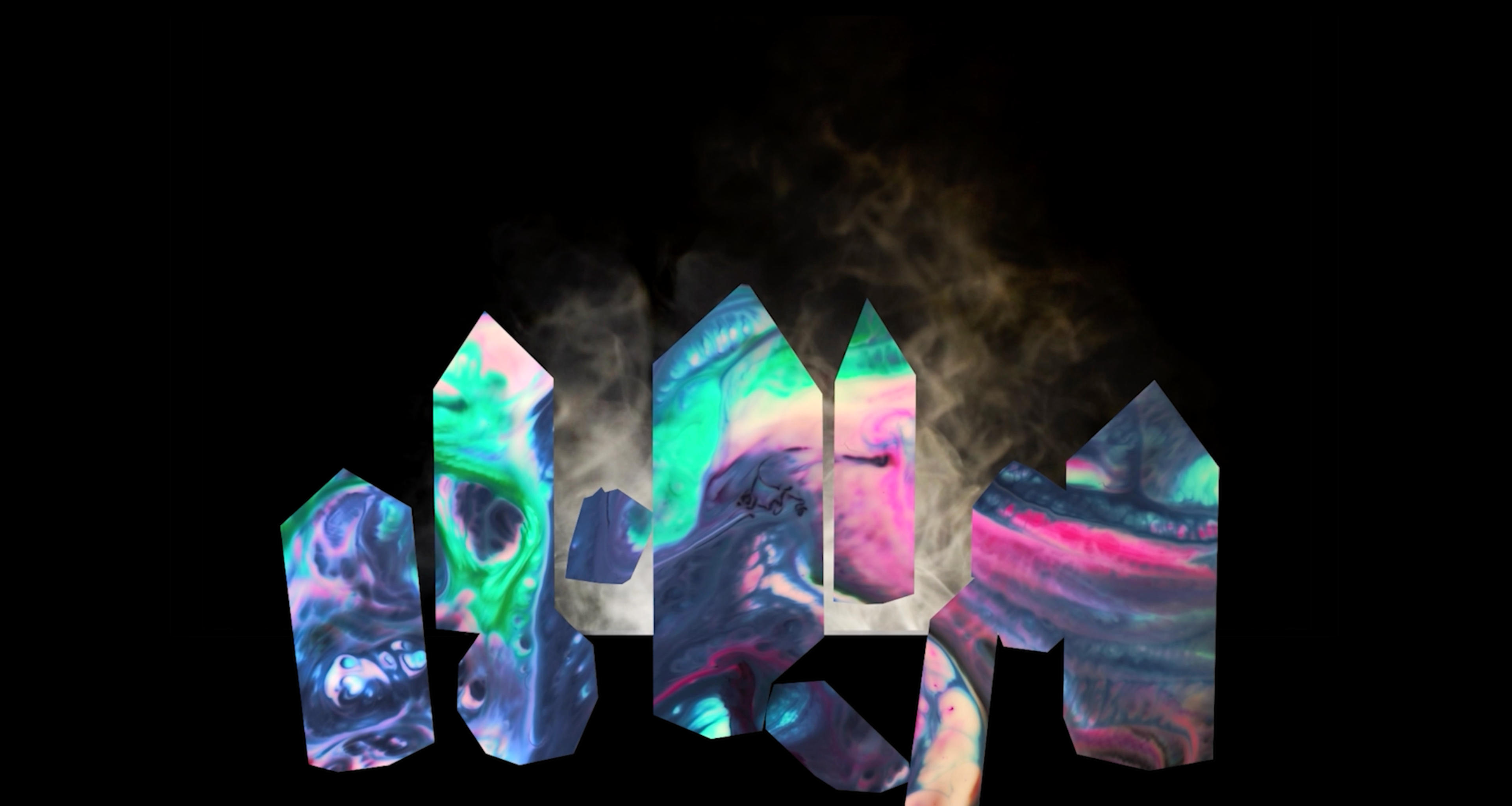
When Crystals Meet Imagery and AI: A Cross-Disciplinary Dialogue Between Natural Order, Technological Systems, and Human Creativity.
“Any sufficiently advanced technology is indistinguishable from magic.”— Arthur C. Clarke
The renowned American multimedia and installation artist Tony Oursler’s major solo exhibition mAcHiNe CrYsTaL opens on May 22, 2026.
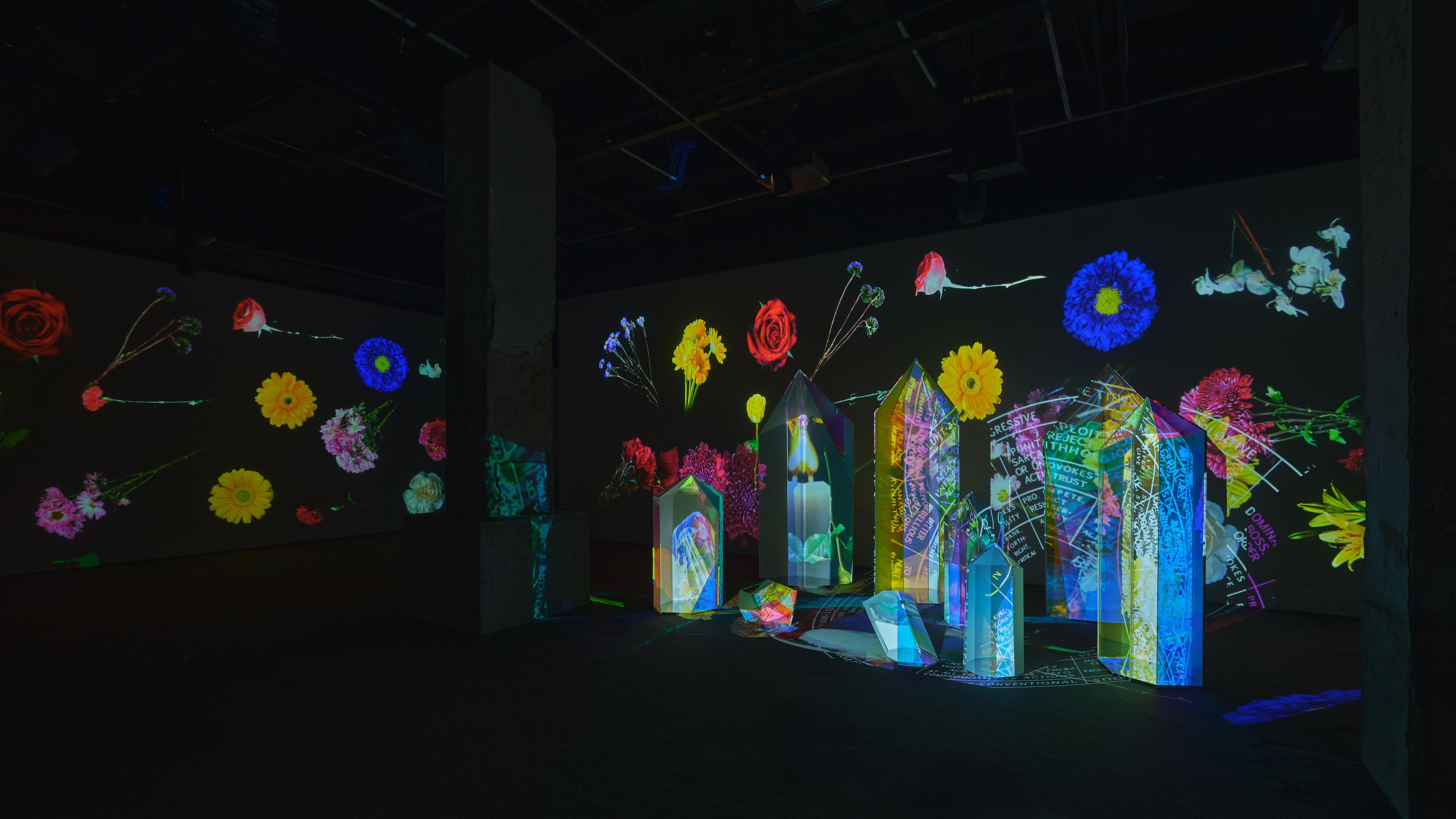
The exhibition features immersive optical installations created specifically for the space. Using the crystal as a medium, Oursler bridges the gap between natural geometry, digital technology, and artificial intelligence. Within the refraction of light and shadow, the exhibition explores the boundaries of technology, nature, and perception, offering audiences a visual wonder that balances scientific precision with artistic poetry.
Born in New York in 1957, Tony Oursler has been a vital force in video art since the mid-1970s. Widely acclaimed as the "Father of Video Sculpture," he pioneered the application of projection technology onto three-dimensional media, breaking the traditional boundaries of two-dimensional screens. His work seamlessly blends video, sculpture, and performance art—often with a touch of humor, irony, and dreamlike surrealism—to probe the complex relationship between humanity and mass media technology.
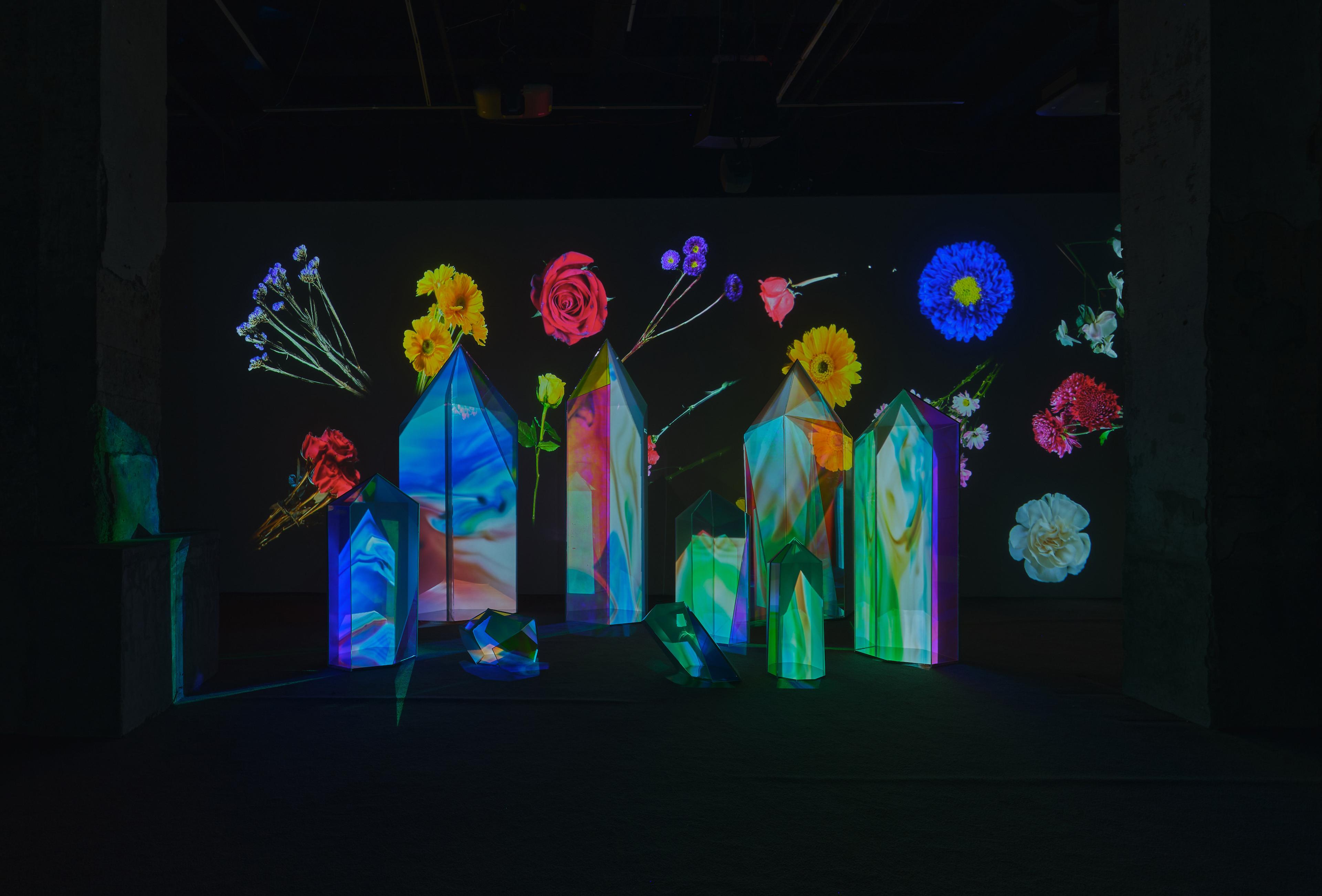
At the heart of the exhibition lies a large-scale installation composed of optical crystal structures that function simultaneously as sculpture and reflective projection surfaces. These faceted forms act as refractive screens for kaleidoscopic digital imagery—figures interwoven with hand-drawn and AI-generated animations—producing a dynamic perceptual field in which images fragment, multiply, and reassemble in response to the viewer’s position. As images fragment, multiply, and reassemble, every moment of viewing becomes a unique, site-specific experience that disrupts fixed narrative frameworks.
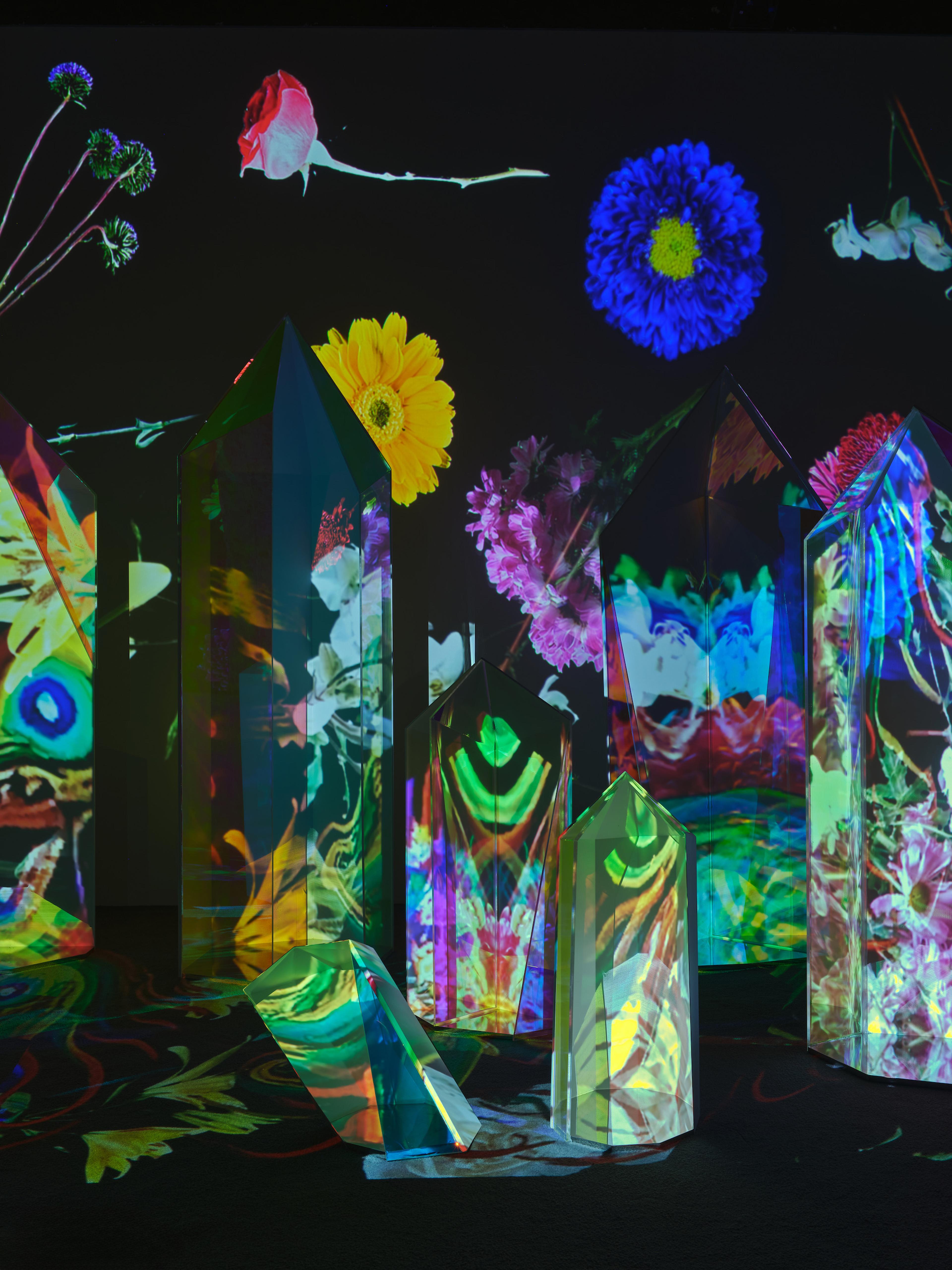
The work draws from crystalline geometries found in nature, which for Oursler suggest both scientific precision and generative creativity. Formed through processes of accretion and repetition, crystals reveal intricate symmetries that have long inspired artistic and mathematical inquiry.
In telecommunications and electronic circuitry, crystals are essential for their resonant properties, enabling the precise synchronization of signals. Embedded in mobile devices and computer processors, they regulate timing and frequency, functioning as the unseen “heartbeat” of contemporary technology. Oursler draws these associations together, linking the ordered symmetry of natural systems with the engineered rhythms of digital infrastructure asking the question: “can technology bring us back to nature? “ The work ultimately transcends visual display to become a vessel for contemplation on technological ethics, ecological perception, and the future of humanity.
ABOUT THE ARTIST
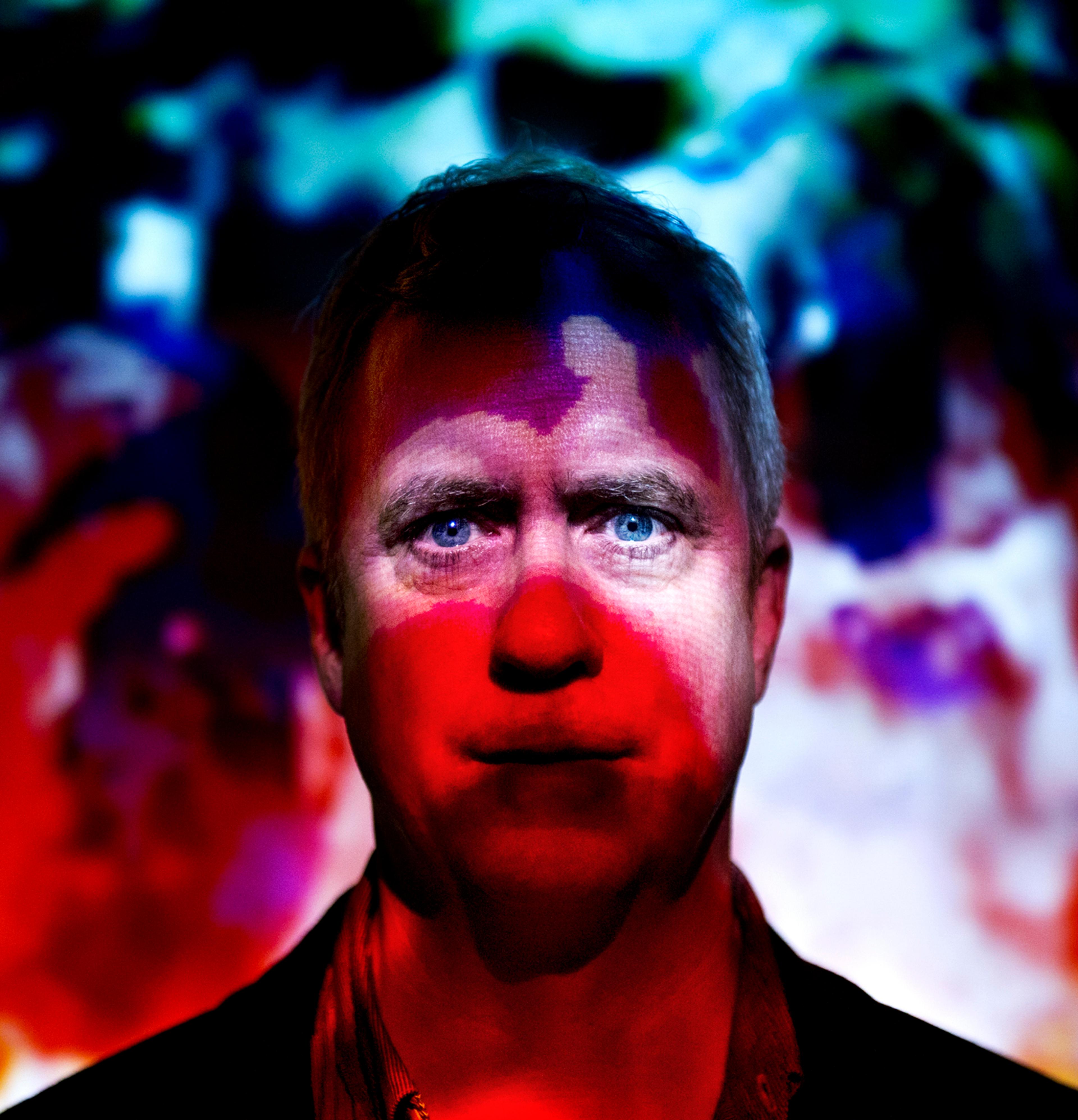
Deeply rooted in a conceptual framework, Tony Oursler conjures multimedia and immersive experiences which combine traditional art making tools with new technologies. Oursler is known for his work with moving images, installation and projection. He draws inspiration from wide ranging pop cultural phenomena including telecommunications, narrative evolution, conspiracy, social media, facial recognition, mysticism and environmental concerns. His works often take the form of a “palimpsest,” layering possible futures with the recent past while focusing on present day issues. In recent years Oursler has used his extensive archive in conjunction with installations to blur the boundaries between art, fact and belief systems. Since 2000 he has produced many public works involving light and projection onto architecture and existing landscape features such as water, trees and smoke and sculptural objects such as cast bronze and stone. Oursler has developed an ever-evolving multimedia and audio-visual practice utilizing projections, computers, video screens, sculptures and optical devices, which might take form as large scale installations, intimate digital effigies or bots, ethereal talking automatons or immersive and sometimes cacophonous environments. Referencing a fully networked, digitally assisted future of image and identity production while harking back to the phantasmagoria, camera obscura and psychedelia, Oursler is keenly aware of the viewer as a participant in his work. As a pioneer of video art in early 1970s California and New York, Oursler developed a unique fusion of poetic free-association, stream of consciousness, dramaturgy and radical formal experimentation, employing painting, animation, montage and live action: “My early idea of what could be art for my generation was an exploded TV”. From performative and lo-fi beginnings to his high-tech environments of today, he holds an enduring fascination with the overlapping worlds of popular and subcultural activities and belief systems. Today, Oursler believes art can be “practiced by all and is a unifying transformative force.”
Tony Oursler lives and works in New York, NY, USA. Born in 1957, he graduated from the California Institute of the Arts, Valencia, CA, USA and collaborated on early works with artists such as Mike Kelley. His museum exhibitions include Kunst Museum Winterthur, Winterthur, Switzerland (2025), Boca Raton Museum of Art, Boca Raton, FL, USA (2024), SCAI PIRAMIDE, Tokyo, Japan (2025); Photo Elysée, Lausanne, Switzerland (2023); Kaohsiung Museum of Fine Arts, Kaohsiung City, Taiwan (2021); Musée d’arts de Nantes, Nantes, France (2020); Guild Hall, East Hampton, NY (2019); Museum of Modern Art, New York, USA (2017); Magasin III Museum & Foundation for Contemporary Art, Stockholm, Sweden (2016); Hessel Museum of Art, Bard College, Annandale-On-Hudson, NY, USA (2016); Museum of Modern Art, New York, USA (2016); LUMA Westbau, Zurich, Switzerland (2015); Stedelijk Museum, Amsterdam, The Netherlands (2014); Oude Kerk, Amsterdam, The Netherlands (2014); Pinchuk Art Centre, Kiev, Ukraine (2013); ARoS Aarhus Kunstmuseum, Denmark (2012); Helsinki City Art Museum, Finland; Metropolitan Museum of Art, New York, USA (2005); Kunsthaus Bregenz, Austria (2001); Whitney Museum of American Art, New York, USA (2000) and Kunstverein Hannover, Germany (1998). In addition to participating in prestigious group exhibitions such as documenta VIII and IX, Kassel, Germany (1987 and 1992), Oursler’s work is included in many public collections worldwide, including the Hirshhorn Museum and Sculpture Garden, Washington, DC, USA; Centre Georges Pompidou, Paris, France; Museum of Modern Art, New York, USA; National Museum of Osaka, Japan; Tate Collection, London, UK; Van Abbemuseum, Eindhoven, The Netherlands and ZMK/Center for Art & Media, Karlsruhe, Germany